Author Archive

Efficient database transaction processing: technical

The European Patent Office a more efficient approach for processing database transactions to be technical. Here are the practical takeaways from the decision T 0568/17 (Database transactions/OPEN TEXT SOFTWARE) of 28.7.2020 of Technical Board of Appeal 3.5.07:

Key takeaways

A reference to OLAP systems does not anticipate a particular way of performing transactions.

The invention

This European patent application relates to providing support for ACID-compliant database transactions (atomic, consistent, isolated and durable) in databases that employ an index structure based on the principle of “compressed inverted indices”. The transactions operate on data entities, which are identified by unique identifiers.

The invention proposes to provide the database as an ordered set of data stores, each data store storing versions of one or more data entities. The data stores are ordered from least recent to most recent. The version of a data entity in the most recent (“newest”) data store is the currently valid version of the entity. If a transaction comprises insert, update or delete operations, new or modified versions of data entities are stored in a newly generated “modifiable” data store. When the transaction is committed, the modifiable data store is added to the ordered set of data stores as the “newest” data store.

Fig. 5 of EP 2 467 791

Here is how the invention was defined in claim 1:

  • Claim 1 (main request)

Is it patentable?

The first-instance examining division had decided that the subject-matter of independent claim 1 of the main request was not new over document D1. The board did not agree:

Document D1 relates to the construction of an inverted index for high-dimensional data (see paragraph [0025] and claim 1). It does not disclose transactions, let alone a detailed mechanism for performing transactions as specified in claim 1 of the main request.

The Examining Division, in point 3.1 of the communication containing the reasons for the decision, apparently considered that “efficient transaction processing” was implicitly disclosed by the reference to current Online Analytical Processing (OLAP) systems in paragraphs [0009] and [0010] of the background section of document D1.

However, a reference to OLAP systems is far from a disclosure of a particular way of performing transactions.

Furthermore, the examining division had stated in its decision that it considered the term “transaction” to mean “any item which is processed within a computer system”. Also this assessment was turned over by the board:

Although this statement may explain why the Examining Division considered transaction processing to be implicit in OLAP systems, it also shows that the Examining Division failed to appreciate that claim 1 relates to the processing of a database transaction in the normal sense of the term, which is not any processed item but a unit of work that, in particular, is executed atomically, i.e. executed completely (and then “committed”) or not at all (with partial changes to the database being rolled back).

As to the claimed “ordered set of data stores”, which is an essential part of the invention’s mechanism for performing transactions, the Examining Division only stated that “the data source(s) from which data is received [in an OLAP system] can either be internal or external to a particular database system”.

But such a plurality of data sources does not disclose an “ordered set of data stores” to which a committed transaction commits a newly generated data store “as newest data store”.

As a result, the board concluded that claim 1 was novel over D1.

Moreover, the technical character of the above distinguishing features was not challenged by the board, but with respect to inventive step the board stated:

Moreover, since document D1 neither relates to providing support for database transactions nor discloses any of the key features of the invention, it cannot be regarded as a promising starting point for assessing inventive step. Therefore, it does not render the subject-matter of any of claims 1 to 15 obvious.

Since the board had doubts whether the search had  been carried out completely, the case was remitted back to the first instance for further prosecution.

More information

You can read the whole decision here: T 0568/17 (Database transactions/OPEN TEXT SOFTWARE) of 28.7.2020

Stay in the loop

Never miss a beat by subscribing to the email newsletter. Please see our Privacy Policy.

Privacy policy
* = Required field

Text classification: non-technical

The European Patent Office considered text classification non-technical. Here are the practical takeaways from the decision T 1316/09 () of 18.12.2012 of Technical Board of Appeal 3.5.01:

Key takeaways

Text classification per se does not serve any technical purpose.

The technical effect of a feature must be sufficiently substantiated.

The invention

The application underlying the present decision relates to a method and a system for suggesting automated responses to an incoming electronic message based on content analysis and categorisation (cf. EP 1 587 004 A1, paras. [0002]-[0003]). A classifier uses query-based classification in combination with example-based classification to classify the content of an incoming message (cf. EP 1 587 004 A1, paras. [0004]).

Fig. 2A of EP 1 587 004 A1

  • Claim 1 (main request)

Is it patentable?

In the course of the examination procedure, the examining division inter alia raised objections concerning inventive step. At the end of the examination phase, the application was rejected. During the appeal proceedings, the appellant argued that the objective technical problem underlying the present application could be formulated as “how to more efficiently and effectively provide a response to an incoming message”. However, the Board in charge was of the opinion that the appellant failed to substantiate why the claimed method and system increases efficiency with respect to providing responses to messages:

4. (…) Firstly, the alleged effects are speculative, considering that nothing in the claimed invention prevents the intersection of the categories provided by a query and by the example-based algorithm being empty and hence that the claimed method is a complete failure. Even more importantly, the appellant did not provide any substantive reason why a more efficient and better categorisation of the informational content of an IEM qualifies as a technical effect at all and why such an advancement over the prior art has technical character.

More importantly, the Board in charge outlined that the inventive solution of the objective technical problem must be based on the technical features of the invention as claimed:

4. A decisive factor in any assessment of inventive step is the objective technical problem underlying the invention. The inventive solution of the objective technical problem must be based on the technical features of the invention as claimed. Text classification per se, however, does not serve any technical purpose. Neither does the combination of different methods of text categorisation per se provide any relevant technical effect that could form a valid basis for defining the objective technical problem. (…)

Hence, all claim features relating to the text classification aspects were ignored for the assessment of inventive step. As a result, the Board in charge concluded that the claimed subject-matter is rendered-obvious by the cited prior art and therefore dismissed the appeal.

More information

You can read the whole decision here: T 1316/09 () of 18.12.2012.

Stay in the loop

Never miss a beat by subscribing to the email newsletter. Please see our Privacy Policy.

Privacy policy
* = Required field

Implementing the execution of a database view query: technical

The European Patent Office considered implementing the execution of a database view query technical. Here are the practical takeaways from the decision T 0104/12 (Metadata-based query/SAP) of 8.9.2016 of Technical Board of Appeal 3.5.07:

Key takeaways

Implementing the execution of a known database view query is technical. However, most probably, such an implementation is rendered-obvious by the prior art.

The invention

The application underlying the present decision relates to the field of data processing, and more particularly, to data extraction. A data extractor is a program used to fill a given extractor structure with data from a database. The extracted data is provided from the source system to a data warehouse (a sink) for the purposes of analysis and management information (cf. WO 2005/015435 A2, page 2, l. 2-5). One of the advantages of the present invention is that the interface between the data sink and the data source is generic such that not only specific data warehouses can act as a data sink but various different kinds of applications which require data from a data source for any purpose. Another advantage is that the data sink does not need to provide a complete extractor structure for all the data which are available from the data source. Rather the data sink is enabled to specify a sub-set of the data which is of interest. This reduces the amount of memory which is required by the data sink and it also substantially reduces the data transmission time from the data source to the data sink (cf. WO 2005/015435 A2, page 4, l. 8-18).

Fig. 1 of WO 2005/015435 A2.

  • Claim 1 (main request)

Is it patentable?

The present application was considered as not patentable by the first instance examining division. In more detail, the application was rejected due to lack of inventive step in light of prior art document D1. The rejection has been appealed by the applicant.

According to the Board of Appeal in charge, the subject-matter of claim 1 of the main request differs from well-known OLTP systems (considered to form the closest prior art for claim 1) in steps a. to d., which set out how the data sink obtains the information necessary to formulate the query, and in steps f. to h., which describe how the query is executed. Particularly, the Board considered the subject-matter of steps f. to h. as technical:

3.8 Hence, starting from the closest prior art identified in point 3.33.3 above, the Board considers that the technical problem solved by steps f) to h) is that of implementing the execution of a database view query. (…)

However, the Board in charge further outlined that the implementation of the execution of a query cannot render the claimed subject-matter inventive:

3.8 (…) The skilled person confronted with this problem would understand that, conceptually, such a query is to do what is described in point 3.63.6 above. The straightforward implementation of this conceptual approach corresponds to steps f) to h). Although the skilled person would be aware that this implementation will generally be inefficient, the acceptance of such a foreseeable disadvantage not offset by any unexpected technical advantage does not involve an inventive step.

As a result, the appeal was dismissed.

More information

You can read the whole decision here: T 0104/12 (Metadata-based query/SAP) of 8.9.2016.

Stay in the loop

Never miss a beat by subscribing to the email newsletter. Please see our Privacy Policy.

Privacy policy
* = Required field

Using history data for predicting the future workload of a tiered storage system: technical

In this decision, the European Patent Office considered the concept of using history data for predicting the future workload of a tiered storage system to be technical. Here are the practical takeaways of the decision T 0943/16 (Tier assignments/MICROSOFT TECHNOLOGY LICENSING) of 25.6.2020 of Technical Board of Appeal 3.5.07:

Key takeaways

Purposively using history data to improve access times is not merely the physical consequence of a non-technical decision but a technical effect to be taken into account in the assessment of inventive step.

The invention

This European patent application concerns the problem of assigning searchable digital items to tiers in a tiered storage system serving as a search-engine index, with higher tiers offering faster retrieval but having smaller capacity.

According to the application, user history data is used to generate a quality indication of a tier assignment, where a tier assignment indicates to which of several tiers searchable digital items are assigned. The user history data may be obtained by monitoring user interaction, e.g. queries issued by the users, search results provided to the users or search results selected by the users.

Fig. 4 of EP 2 248 055

Here is how the invention is defined in claim 1 of the main request:

A computer implemented method, comprising:

receiving user history data including queries that were issued by users and search results provided to the users in response to the queries; and

generating an indication of quality of a tier assignment used to store searchable digital items in a tiered storage system, wherein higher tiers have faster access and retrieval times when compared to lower tiers, and wherein the indication is based at least in part upon a subset of the user history data;

wherein the tier assignment indicates to which of several tiers the searchable digital items are assigned;

wherein the tiered storage system is a search engine index; and

wherein the method further comprises generating an improved tier assignment based at least in part upon the indication of quality, and assigning digital items to the tiered storage system based at least in part upon the improved tier assignment.

Is it technical?

The first-instance examining division had refused the patent application for lack of inventive step.

The board of appeal started its assessment from a prior art document that concerned the allocation of resources in the form of computing systems to applications with a tiered architecture, and concluded that the invention was not rendered obvious by this prior art. However, the board came to another conclusion with respect to the prior art acknowledged in the application itself:

In paragraphs [0003] and [0004] of its background section, the present application acknowledges a prior-art method of generating an improved tier assignment for storing searchable digital items in a tiered storage system, where the higher tiers have faster access and retrieval times when compared to lower tiers, the tier assignment indicates to which of several tiers the searchable digital items are assigned, and the tiered storage system is a search engine index. The acknowledged prior-art method further includes a step of assigning digital items to the tiered storage system based at least in part on the improved tier assignment.

The board found that claim 1 differed from the acknowledged prior-art method in three aspects:

  • (a) user history data is received which includes queries that were issued by users and search results provided to the users in response to the queries;
  • (b) an indication of quality of a tier assignment is generated based at least in part on a subset of the user history data; and
  • (c) the improved tier assignment is generated based at least in part on the indication of quality.

The first-instance examining division had essentially taken the view that the distinguishing features were not based on technical considerations and did not contribute to a technical effect. Accordingly, they could not contribute to inventive step under the COMVIK approach.

The board did not agree:

In the claimed method, history data is used for predicting the future use or workload of the system. The Board accepts that, in the present context, analysing history data enables a statistically reliable prediction of the system’s operation and does not lead to purely speculative results. Since the claim explicitly and clearly specifies that higher tiers have faster access and retrieval times than lower tiers, an improved tier assignment means improved average access times. Moreover, since the history data is purposively used to improve access times, this improvement is not merely the physical consequence of a non-technical decision but a technical effect to be taken into account in the assessment of inventive step (T 697/17 of 17 October 2019, reasons 5.2.3 to 5.2.5; T 1965/11 of 24 March 2017, reasons 5.1).

As it still had to be determined whether adding distinguishing features (a) to (c) to the acknowledged prior-art method would involve an inventive step, the board of appeal remitted the case back to the examining division for further prosecution.

More information

You can read the whole decision here: T 0943/16 (Tier assignments/MICROSOFT TECHNOLOGY LICENSING) of 25.6.2020

Stay in the loop

Never miss a beat by subscribing to the email newsletter. Please see our Privacy Policy.

Privacy policy
* = Required field

Improving the quality of computer-generated exams: non-technical

In this decision, the European Patent Office did not grant a patent on the concept of improving the quality of computer-generated exams by utilizing empirical data of questions from previous exams. Here are the practical takeaways of the decision T 2087/15 of 21.7.2020 of Technical Board of Appeal 3.4.03:

Key takeaways

Taking into account the correlation with answers to other questions to improve the quality of each question does not have a technical effect, but would only improve a teaching method or competence screening, which is equivalent to an improvement of a non-technical activities, essentially being based on mental acts.

The invention

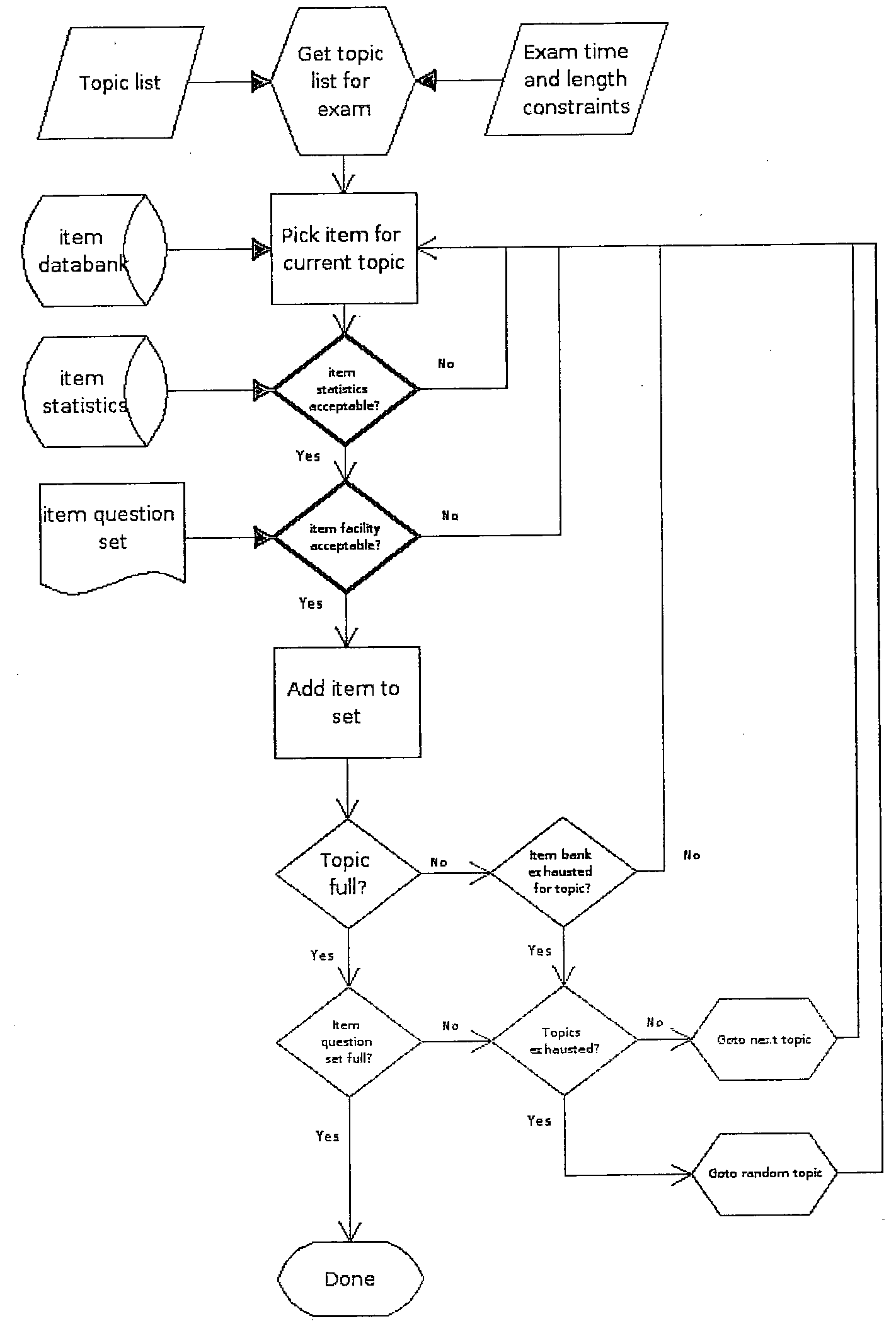
This European patent application relates to a method for improving the quality of computer-generated sets of examination questions utilizing empirical data of question items from previous exams.

The data are stored in a database of a data storage device and can include e.g. facility/difficulty, selectivity, distribution of answers, the correlation between the quality of the answers given to the question and the quality of the rest of the exam given by a person, the deviation in the responses given to the question, or other criteria. The method comprises a step of selecting a random question from the database and evaluating the selected question based on predetermined requirements for the possible inclusion in a question set (e.g. an exam or a questionnaire) for presentation to exam candidates. Questions found not fulfilling the requirements are discarded so that a question set of better quality is obtained. The steps of storing data, selecting, evaluating and possibly discarding question items are performed by computer-based means.

Fig. 1 of EP 2 100 285

Here is how the invention is defined in claim 1:

  • Claim 1 (sole request)

Is it technical?

The first-instance examining division had refused the patent application based on lack of inventive step.

The board of appeal based its analysis on independent method claim 8, which was broader than system claim 1, because claim 8 lacked the step of indicating “a quality of the new question set by comparing an actual reliability of the new question set in use to a calculated reliability, assuming …”. According to the board, the aim of the present invention as defined in claim 8 was to generate exams, questionnaires or similar skill-level tests administered in large numbers, by:

a) randomly selecting a question within one or more predetermined topics from a number of existing questions in at least one topic, each question of said number of existing questions being associated with a data set related to answers given to the questions in previous exams,

b) evaluating the selected questions relative to predetermined requirements related to a measure based on facility, selectivity and distribution corresponding to said data set for possible inclusion in a question set for presentation to exam candidates and

c) discarding questions not fulfilling said requirements thereby generating a question set for presentation to exam candidates.

Based on the established COMVIK approach, the board assessed whether these features contributed to the solution of a technical problem, but found that no technical contribution was present:

The Board is of the opinion that steps a) to c) are well-known tasks of people preparing exams (e.g. teachers) who for centuries have performed this task mentally or on paper. A school teacher or an instructor preparing an exam e.g. for driving test candidates or for pilots selects question items from a pool of existing questions used in previous tests and evaluates these items with respect to their facility (i.e. how well or badly the question was answered in previous exams), selectivity (i.e. how representative the question is for the ability the exam aims to test) or distribution (i.e. how the scores in previous exams were distributed among the different candidates). If they find the selected and evaluated question unsuitable for the test (e.g. because it was too easy or too difficult for the average candidate in previous tests or because it revealed being erroneous or unclear), they will discard this particular question and not include it into the test they are preparing. However, if they find the question item suitable for the test, they will consider its inclusion in the test.

It follows that steps a) to c) for adapting questions to the level of students are not related to solving a technical problem, but to the non-technical task of a test writer (e.g. a teacher).

Even when characterised quantitatively, the effects underlying the claimed selection criteria are non-technical effects, merely possibly taking place in the minds of students facing easy or difficult questions, as they might face a test which corresponds more or less to their individual intellectual abilities. The same effects are expected to be achieved by the question sets resulting from the above mentioned steps a) to c).

Also the arguments put forward by the appellant did not convince the board. Firstly, the appellant argued that taking into account the correlation with answers to other questions improves the quality of each question:

The Board is of the opinion that the appellant’s argument that the invention took into account the correlation with answers to other questions to improve the quality of each question – see statement of grounds of appeal, page 1, third and fourth paragraphs – is not relevant, because in the method according to claim 8 a step of evaluating the “correlation” of a given question item with answers to other questions is not a part of the claimed method. This appears to be confirmed by the appellant’s statement in the annex to the letter dated 21 April 2020, page 9, first paragraph.

Even if the Board were to accept that the invention took into account the correlation with answers to other questions to improve the quality of each question, the effect of this feature is not of technical nature, but would only improve a teaching method or competence screening, which is equivalent to an improvement of a non-technical activities, essentially being based on mental acts.

The Board did also not share the appellant’s view that the present invention would work without human interaction so that it does not necessitate that any part would be performed in the mind of a student:

The method according to claim 8 uses a data base comprising data sets “related to answers given to the questions in previous exams” and aims at “generating a question set for presentation to exam candidates”. A skilled person understands that the term “previous exams” does not relate to exam performed by a computer, but by human candidates so that the data sets are the result of human interaction, namely the performance of human test candidates in past exams. Moreover, the skilled person understands that the questions sets generated are to be presented to human exam candidates so that it can reasonably be argued that those effects provided by steps a) to c) which are actually sought to be achieved by the invention and in the end might provide an objectively measurable difference over prior art question sets – i.e. that the question sets generated perform better than previous question sets – might possibly take place in the minds of these candidates.

The appellant further argued that the invention “consistently” improved the quality of a question data base, and hence the quality of questionnaires produced from that in the case of multiple choice question (MCQ) exams. But also this argument did not succeed:

The Board is not convinced by these arguments, because claim 8 neither comprises any means for improving the quality of the database nor is it limited to MCQ exams. However, even if the Board were to accept that the quality of the questions in a data base would improve, this cannot be qualified as a technical effect. The Board is of the opinion that steps a) to c) are performed by a person preparing an exam with questions to be presented to candidates. These type of exams existed well before the priority date of the present application, e.g. for the Chinese imperial examinations (606 – 1905). Hence, the Board agrees with the appellant that the claimed method does not change an individual question (i.e. does not improve its quality), but aim at providing an improved set of questions for an exam.

Lastly, the appellant stated that the technical character of the invention would be related both to the objectivity and efficiency of the system as well as the fact that a manual operation handled by humans simply is not possible. The question sets were produced as a data selection resulting from statistical analysis of the registered responses to the questions. The appellant also argued that the invention was completely separated from the subjectivity and illusiveness of what goes on in the mind of students and teachers:

The Board is not convinced by these arguments, because claim 8 is not limited to a “large amount of input” difficult to handle by a human operator (e.g. a teacher). It might be correct that a test writer would have difficulties to mentally handle fifty thousand questions. In the Board’s view there would be no problem to handle an ensemble of e.g. fifty questions known to the test writer and used in previous tests. As claim 8 does not specify the number of questions from previous exams in the data base, the method involving steps a) to c) on a computer is not necessarily more efficient. Furthermore, if the decision of including or discarding is based e.g. on the difficulty of the selected question (i.e. the number of correct answers compared to the number of total answers), it is not plausible that the method implemented on a computer would be necessarily more objective (or less subjective) than the same method performed by a human. Moreover, claim 8 does neither exclude any additional “manual operation” by a human being, nor does it require any statistical analysis, “sound mathematics and statistical procedures” or “special statistical arrangements” as argued in the statement annexed to the letter dated 21 April 2020. In other words, the Board is not convinced that the claimed method is necessarily performed more efficiently and/or less subjectively by computer-based means, compared to a human test writer. Finally, the Board cannot agree that the steps a) to c) could not be a part of what the appellant calls “teaching sphere”, because the function of exams e.g. provided by a teacher to his students is to evaluate if his teaching was successful. Hence, it cannot be said that steps a) to c) are outside the “teaching sphere”.

Therefore, the Board shared the view of the examining division that the technical features of claim 8 are not more than a computer having a data storage device (i.e. a memory) for storing a data base and a processor for implementing a method involving non-technical method steps a), b) and c) on this computer. Thus, the sole technical problem derivable from the wording of claim 8 was the proper configuration and programming of known technical means (i.e. a computer having a data storage device) in order to implement non-technical (teaching) constraints, i.e. the method steps a) to c).

The application itself did not provide any specific way of how this objective technical problem is to be solved, but merely stated that “all of these may be programmed into a computer or a computer network using general programming tools”. Therefore, the Board took the view that a skilled person (i.e. a computer specialist) being provided with the above requirement specifications, i.e. steps a) to c), would implement them in a straightforward manner as part of his daily routine, that is to say without making an inventive step.

In the end, the claims were not found to involve a non-obvious technical contribution, and thus the appeal was dismissed.

More information

You can read the whole decision here: decision T 2087/15 of 21.7.2020

Stay in the loop

Never miss a beat by subscribing to the email newsletter. Please see our Privacy Policy.

Privacy policy
* = Required field

Projection effects in a 3D motion graphical user interface: non-technical

In this decision, the European Patent Office did not grant a patent on the concept of a three-dimensional motion graphical user interface. Here are the practical takeaways of the decision T 2371/17 (Animated 3D-GUI/SAMSUNG) of 7.7.2020 of Technical Board of Appeal 3.5.05:

Key takeaways

Guiding a user’s eyes by certain graphical projection effects only relies on the user’s preferences and thus cannot confer a technical character to the projection effects.

The property that a time delay to move the eyes is “comfortable” or not for a user is heavily dependent on the user’s preferences and cannot be related to a technical effect.

The invention

This European patent application relates to a three-dimensional motion graphical user interface (MGUI).

Compared to conventional two-dimensional GUIs, which are flat and static, three-dimensional GUIs are multi-level and dynamic, according to the application. When communicating information to a user, the three-dimensional GUI is advantageous in that it is more visual and pleasing to the user. However, occasionally, a two-dimensional GUI is said to be more effective than a three-dimensional GUI. For example, in the case of text, a larger amount of information can be communicated in a two-dimensional plane, and it is easier for the user to read information using the two-dimensional GUI.

According to the patent application, in the conventional three-dimensional user interface, three-dimensional information and two-dimensional information cannot be displayed such that the three-dimensional information and the two-dimensional information can be dynamically associated with each other.

The application formulates its aim as to provide a three-dimensional motion graphical user interface capable of effectively displaying information and pleasing to a user and an apparatus and a method of providing the same.

Fig. 6a of EP 1 780 632

Here is how the invention is defined in claim 1:

  • Claim 1 (main request)

Is it technical?

The first-instance examining division had refused the patent application based on lack of inventive step.

The board of appeal based its inventive-step assessment on a document that describes a graphical user interface which displays headlines of news stories on a polyhedral graphical object. By clicking on one of the faces of the polyhedral object, the corresponding news story is displayed in full in a pop-up window under the corresponding headline.

Claim 1 essentially differed from this prior art by displaying second information on a projected surface using projection effects. Here is how the board considered this difference:

With respect to the other features of claim 1, the board agrees with the findings of the examining division that the identified distinguishing feature of displaying the second information on a projected surface using projection effects represents a mere presentation of information. An association between the first and second displayed information, as claimed, is achieved in D3 by having the same headline displayed on the selected face of the polyhedral object and in the pop-up window, which can both be viewed by the user.

It thus remained to be seen whether the projection effects achieved a technical effect over the prior art:

All the effects that the appellant considers to be achieved by the projection effects actually rely on the user’s preferences and do not contribute to any technical effect and/or are already achieved by the method of D3. In particular, guiding the user’s eyes from the selected face to the projected surface, as well as a one-to-one correspondence, is clearly achieved in D3 when the large pop-up window having the same headline (72, Figure 9) appears above the polyhedral object (60, Figure 9) showing the selected face in a prominent position. A definitive advantage of the eye guiding provided by the projection effects over the eye guiding achieved by D3 could only rely on the user’s preferences and thus cannot confer a technical character to the projection effects. The appellant has further argued that using projection effects would save space on the projected surface and thus enable this surface to display more second information, in contrast to the pop-up window in D3 that must display the headline in addition to the second information. However, in the board’s view, the projection effects themselves take up space on the display and thus limit the size of the projected surface and by consequence the display space dedicated to the second information.

Therefore, claim 1 of the main request was found not to involve an inventive step.

Concerning auxiliary request II, the appellant argued that the projection effects provide a small time delay which provides the user with a comfortable amount of time to move their eyes from focusing on the polyhedron object to focusing on the second information on the projected surface. However, the board noted:

The board first notes that no such time delay is defined in claim 1 or even mentioned in the description. Second, the property that a time delay to move the eyes is “comfortable” or not for a user is heavily dependent on the user’s preferences and cannot be related to a technical effect.

In auxiliary request V, the appellant tried to define an animation on the graphical user interface upon the user selecting a face of the polyhedral object. Also this did not convince the board:

The board agrees in substance with the examining division that the effects of this animation are of an aesthetic nature and relate to psychological and cognitive aspects of the human user such that the animation features do in fact merely represent a presentation of information. Moreover, opening a face of a three-dimensional icon is a well-known feature in the field of graphical user interfaces, as illustrated by D4 (see Figures 9A and 9B). The appellant has argued that a technical effect of this animation is to better attract the visual attention of the user. In the board’s view, this effect depends mainly on the user’s preferences and does not represent a technical effect on which an inventive step argument can be based.

In the end, none of the requests were found to involve a non-obvious technical contribution, and thus the appeal was dismissed.

More information

You can read the whole decision here: T 2371/17 (Animated 3D-GUI/SAMSUNG) of 7.7.2020

Stay in the loop

Never miss a beat by subscribing to the email newsletter. Please see our Privacy Policy.

Privacy policy
* = Required field

Presenting clinical statistics to help identify previous similar medical cases: non-technical

In this decision, the European Patent Office did not grant a patent on the concept of presenting clinical statistics to help identify previous similar medical cases. It gives an concise summary of the test for assessing whether an invention falls into the “presentation of information” exclusion. Here are the practical takeaways of the decision T 1091/17 (Clinical statistics/PHILIPS) of 4.6.2020 of Technical Board of Appeal 3.5.05:

Key takeaways

The view that the reference to “presentations of information” in Article 52(2)(d) EPC was meant to relate exclusively to the cognitive content of the presented information (“what is presented”) and not to the manner in which it is presented (“how it is presented”) has not been adopted by the mainstream case law.

The test suggested in the case law to judge whether a presentation of information might exceptionally contribute to the technical character of the invention is to assess whether it credibly assists the user in performing a technical task by means of a continued and guided human-machine interaction process.

The invention

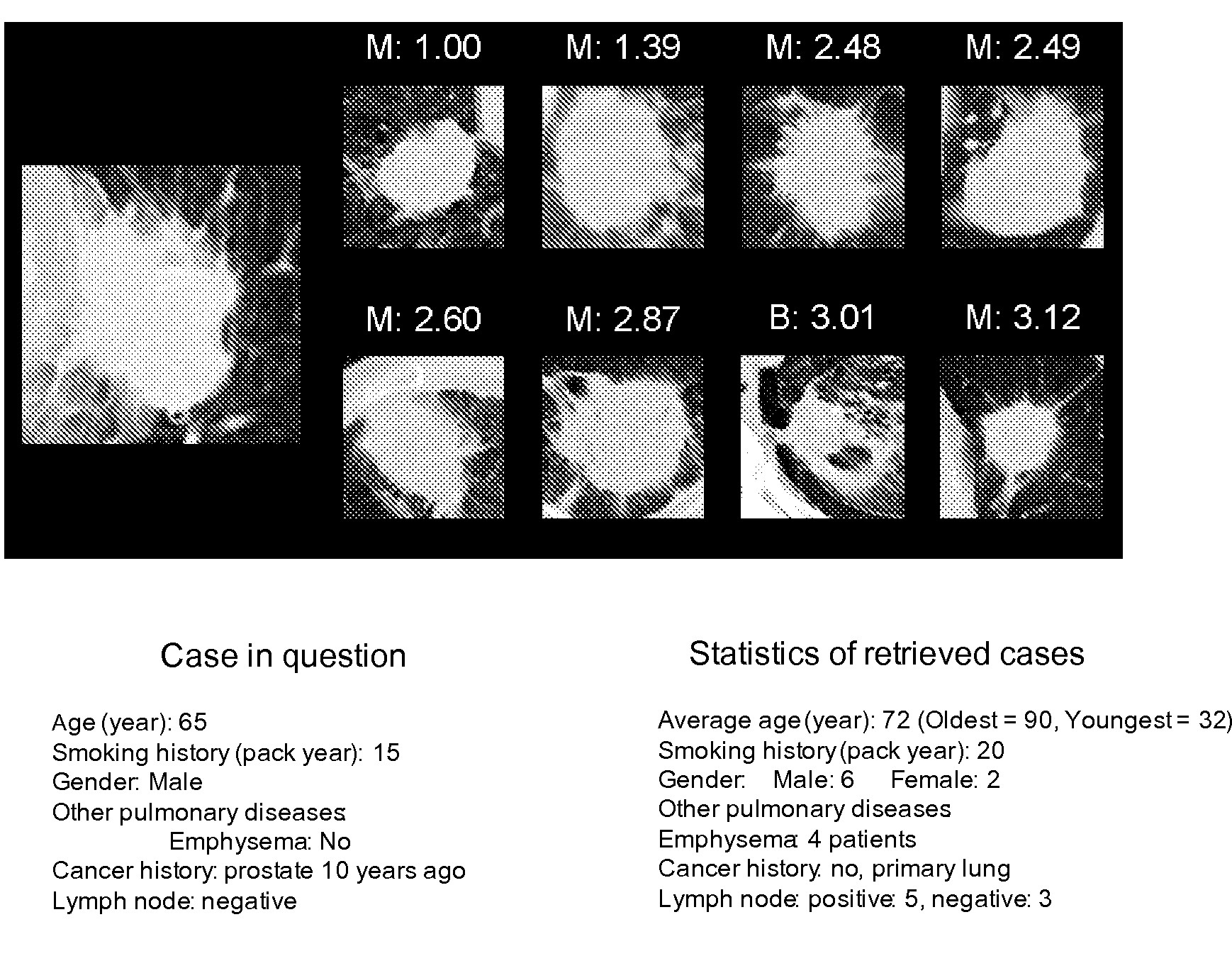
This European patent application relates to searching for case-based decision support in medical applications.

Case-based clinical decision support systems (CDSS) known from the prior art can assist physicians by identifying previous cases that have been diagnosed and treated, and are similar to the case under evaluation. According to the application, current case-based CDSS systems mostly present similar cases based on only image-based information and fail to incorporate patient medical history, which plays an important role in the diagnostic process. Moreover, previously known systems lack transparency as to why certain cases are retrieved.

Fig. 2 of EP 2 229 644

Here is how the invention is defined in claim 1:

  • Claim 1 (main request)

Is it technical?

The first-instance examining division had refused the patent application based on lack of inventive step.

The board of appeal based its inventive-step assessment on a document which disclosed an iterative method for querying medical images in a database in which initial queries are refined in subsequent iterations or interactive “loops”. The board agreed with the appellant that this document did not disclose calculating statistics on the basis of clinical information associated with the set of similar images, presenting these statistics to the user and receiving subsequent user input based on these statistics.

The appellant emphasized the fact that claim 1 presents the calculated statistics together with the set of similar cases. In the appellant’s view, the case law consistently distinguished between what is presented to the user (statistics) and how it is presented (together with the set of similar cases). Since, in this case, presenting the statistics together with the similar cases involved how the information is presented rather than what is presented, it was not a presentation of information as such.

Here’s how the board responded:

The board is aware of a few exceptional decisions of the boards of appeal (see T 1749/06, point 4.1.3, second sentence; T 651/12, page 16, first full sentence) expressing the view that the reference to “presentations of information” in Article 52(2)(d) EPC was meant to relate exclusively to the cognitive content of the presented information (“what is presented”) and not to the manner in which it is presented (“how it is presented”). Nevertheless, this view has not been adopted by the mainstream case law in the course of legal development (cf. G 3/08, Headnote 4). The predominant view in the case law is what T 1235/07 (see point 11) calls the “wider view”, according to which both what is presented and how it is presented are considered to be “presentations of information” (see T 1143/06, points 3.4, 3.5 and 5.4; T 1741/08, point 2.1.10; T 1214/09, point 4.8.1; T 1562/11, point 2.7, last paragraph; T 1802/13, page 10, first full paragraph).

This view has also been adopted by the European Patent Office for its practice (see Guidelines for Examination in the European Patent Office, November 2019 edition, G-II.3.7).

Therefore, the appellant’s argument that the distinguishing features do not relate to presentations of information does not convince the board.

The board also commented on the relevant test for identifying whether an invention relates to a presentation of information “as such”:

Irrespective of whether an invention relates to “what is presented” or “how it is presented”, the test suggested in the case law to judge whether a presentation of information might exceptionally (see T 1741/08, point 3.3, last paragraph) contribute to the technical character of the invention is to assess whether it credibly assists the user in performing a technical task by means of a continued and guided human-machine interaction process (see T 336/14, Headnote and T 1802/13, page 10, second full paragraph).

A prerequisite for this test is the proper formulation of the technical task performed by the user. The appellant referred in its written submissions to a “medical task”. This level of generality would not be sufficient since not every task performed in medicine is a technical task. Indeed an example given by the appellant (“if the statistics, e.g. show that seven out of eight retrieved cases belong to patients with cancer, then the user can derive that the case under evaluation might have something to do with cancer”) illustrates this point. The example implies that the alleged technical task is a diagnostic task. However, besides technical tasks carried out mainly in the examination phase involving the collection of data, diagnosis involves tasks of a predominantly non-technical nature such as the deductive decision phase, which is a purely intellectual exercise (see G 1/04, point 6.4.1). The “medical task” in the appellant’s example relates to the purely intellectual deductive decision phase and therefore cannot be accepted as a technical task.

The appellant then argued, in analogy to T 643/00 (see Catchword, second sentence), that searching and retrieving medical cases stored in a database was the relevant technical task. The board could accept this as a suitable formulation. The question to be answered then is whether the invention credibly assists the user in performing this technical task by means of a continued and guided human-machine interaction process.

Here the appellant argued that the presentation of the calculated statistics together with the set of similar cases assisted the user, typically a physician, in performing the technical task of searching for a medical case more efficiently and reliably. This provided helpful information to guide the physician in concentrating their search and thus obtaining the desired case more quickly, which was a technical effect. The appellant also argued that the mere fact that mental activities on the user’s part were involved did not necessarily render this effect non-technical.

But the board did not agree:

This argumentation relies heavily on the wording of T 643/00, point 17, but removes it from its proper context. The borrowed wording is preceded by the following text: “the functions/steps of processing the images in a specific format, i.e. a predetermined plural number of images in a side-by-side manner at a low level of resolution, and allowing selection and display of an image at higher resolutions [provide information to the the user in the form of a technical tool for an intellectual task he has to master]”. It is thus clear that the deciding board in T 643/00 did not give a carte blanche for deeming technical any information that supports a user in performing a technical task (see also T 1741/08, point 2.1.12, “not everything that supports a technical task has itself a technical character”). It made this statement for the very specific case of a particular display technique defined in terms of an objective technical criterion, namely image resolution. This has also been the common understanding in subsequent case law (see e.g. T 1741/08, point 2.1.13; T 336/14, point 1.2.6; T 581/14, point 16.19). The effect of image resolution on the user is an objective physiological effect which can qualify as a credible technical effect (see T 1442/16, point 1.8, last paragraph), unlike the effect of presenting clinical statistics in the case in hand, which relies on a chain broken by semantic or cognitive processing (see T 1741/08, point 2.1.6). Therefore, T 643/00 does not help the appellant’s case.

The appellant was not able to convince the board that the distinguishing features of claim 1 of the main request produced a technical effect. Therefore, claim 1 of the main request does not involve an inventive step (Article 56 EPC).

Also the auxiliary requests filed by the appellant did not change this assessment, so that the appeal was eventually dismissed.

More information

Stay in the loop

Never miss a beat by subscribing to the email newsletter. Please see our Privacy Policy.

Privacy policy
* = Required field

Displaying appointment requests and surrounding appointments in a mini-calendar format: non-technical

In this decision, the European Patent Office did not grant a patent on the concept of displaying an appointment request and its surrounding appointments in a mini-calendar format to avoid that the user has to switch to the calendar module. Here are the practical takeaways of the decision T 1750/13 (Scheduling opportunity previewer/Microsoft Technology Licensing, LLC) of 1.10.2019 of Technical Board of Appeal 3.5.01:

Key takeaways

A requirement for describing what a user wants to see is a non-technical rule or scheme and its arrangement on a display resulting in a “mini-calendar” format is a mere presentation of information.

The invention

This European patent application relates to a previewer which displays a request to add a new appointment or meeting to the user’s calendar which takes account of the surrounding appointments in the user’s calendar. The preview is displayed in a “mini-calendar format” which is a miniature view of the user’s calendar in the user’s current context. The “mini-calendar format” shows conflicting and/or adjacent appointments:

Fig. 6 of EP 2 304 658

The invention allows a user to make a decision on how to handle a request for a new appointment, e.g. to accept, decline, propose new time, without having to switch the “context”, in other words, the user does not have to open their calendar module in order to make this decision.

Here is how the invention is defined in claim 1:

  • Claim 1 (main request)

Is it technical?

The first-instance examining division had refused the patent application based on a lack of inventive step. In the summons to oral proceedings, the board expressed a preliminary view that the refusal was justified. In the decision, the board points out:

In order to make an informed decision, any kind of scheduling and planning activity requires a user to have information at hand about appointments in his or her calendar which are potentially conflicting or surrounding the new appointment. In the Board’s judgement this information and its provision simply form part of an administrative or business scheme and a presentation of information. The features of claim 1 of receiving a proposed scheduling opportunity or appointment (feature i), retrieving the context of one or more surrounding appointments [from the user’s calendar] (feature ii) and displaying the result (feature iii) to the user in a specific format [for allowing it to make a decision about whether to accept or decline the new appointment] are a computer implementation of this scheme.

The established approach for dealing with mixed-type inventions is the “COMVIK approach” (T 641/00 – Two identities / COMVIK), according to which the non-technical features cannot contribute to inventive step.

The issue in this appeal is thus whether the above mentioned scheme has any technical features or effects. If not, then claim 1 of the main request is merely a straightforward implementation of the scheme on a general purpose computer, which would not involve an inventive step.

One argument of the appellant was that the claimed “previewer system” was a technical feature. The board, however, did not follow this argument:

The Board notes that in text processing, previewing a document means displaying it on a screen instead of, or prior to, printing it. The purpose is to inform a user about the look of a document, whether the formatting is correct, thereby avoiding the waste of paper. In other fields, a preview of information is a visualisation of a subset of information, such as a summary of the content of a book on a book cover, of selected fields of its bibliographic data. The purpose is to inform a person about a book without obliging him to read its full content.

In the Board’s judgement, both are a mere presentation of information which does not lead to a technical effect and therefore does not have technical character.

Secondly, the appellant argued that a “mini-calendar format” should be regarded as technical feature:

The feature “mini-calendar format” refers to a miniature view of the user’s calendar in the user’s current context, see paragraph [0020]. It is employed in the application to limit the information to be displayed to those appointments which are in conflict or which are close to the proposed appointment. However, in the context of scheduling appointments, which is an administrative activity, a user evidently only needs to consider the “surrounding” and “conflicting” appointments, other appointments are not relevant for him to decide. In the Board’s view, a requirement for describing what a user wants to see is a non-technical rule or scheme and its arrangement on a display resulting in a “mini-calendar” format is a mere presentation of information.

The appellant had also argued that displaying the “scheduling opportunity” in a mini-calendar format with the context of surrounding appointments achieved three technical effects:

  1. it saved time and resources because only a minimum number of surrounding appointments needed to be retrieved
  2. it improved user-friendliness and usability because the context of surrounding appointments for a “scheduling opportunity” was retrieved
  3. it saved resources because a user did not need to open a separate calendar

But also this did not persuade the board:

However, in the Board’s view, the effects identified are too vague and would be mere bonus effects. They depend on the underlying computer system on which the information is to be displayed, which means that on certain devices resources may be saved, while on others there may be no such saving effect. For example, the need for less storage space is an (inevitable) bonus effect of choosing which data to consider. Moreover, the effects have a subjective aspect, depending on the respective user. For example, while a miniature display may be user-friendly for one user, it may not be the case for another user who prefers to handle his or her appointments in a separate calendar application.

Therefore, claim 1 was found to lack an inventive step, and the appeal was dismissed.

More information

You can read the whole decision here: T 1750/13 (Scheduling opportunity previewer/Microsoft Technology Licensing, LLC) of 1.10.2019

Stay in the loop

Never miss a beat by subscribing to the email newsletter. Please see our Privacy Policy.

Privacy policy
* = Required field

Privacy protection by linking customer data with a key instead of personally identifiable information: non-technical

In this decision, the European Patent Office did not grant a patent on the concept of linking customer data with a key instead of personally identifiable information to improve privacy protection. Here are the practical takeaways of the decision T 1150/13 (Linking data/TRA) of 26.5.2020 of Technical Board of Appeal 3.5.01:

Key takeaways

The protection of privacy, by replacing PII (an address) with non-PII (a key) is not technical. It is an administrative scheme or a mental act.

The invention

This European patent application generally relates to the protection of privacy of information.

The invention includes a “tier of a processing system configured to receive data”, wherein said tier may e.g. cover a marketing research company. The market research company compiles data about households for measuring the effectiveness of advertisements. The data is received from one or more data suppliers, including a digital television set-top-box (DTSB) that supplies clickstream data and other data relating to the household’s viewing habits.

The received data comprises a “first identifier”. This could be a customer account number used as an identifier of the household by the data supplier. In order to link data relating to the same household from different data suppliers, there is a “thesaurus” that does just that. The thesaurus seems to be generated by a third party entity (“list matcher”) that is trusted with personally identifiable information. The list matcher uses household addresses to link the account numbers (“first identifiers”) from different data suppliers and assigns a “key” (TRA_KEY) to each household. The key does not contain any PII.

The marketing research company obtains the thesaurus from the third party and uses it to link customer account numbers relating to the same household. Since neither the customer account numbers, nor the thesaurus, contains PII, privacy can be preserved.

Here is how the invention is defined in claim 1:

  • Claim 1 (sole request)

Is it technical?

The first-instance examining division considered that claim 1 contained a mix of technical and non-technical features. In fact, the core features of the invention summarized above were considered to be abstract, administrative steps devoid of technical character. As the avid reader will know, non-technical features do not enter the inventive-step analysis under the COMVIK approach.

The appellant argued that the invention saved bandwidth and improved data security. The bandwidth savings came from the use of a central authority for generating the link between data from different sources. Without it, the marketing research company would have to obtain and store many different customer IDs. But the board did not agree:

The Board, however, does not see that the invention provides any savings in bandwidth. Neither claim 1 nor the description defines the amount of data stored at and sent between the different entities. Indeed, bandwidth savings is not mentioned as an issue anywhere in the application. The data needs to be stored somewhere within the system, and although a central data store might have some benefits, it creates overhead as well.

In the Board’s view, the role of the central List matcher has to do with trust and not with storage/bandwidth. For some reason, the List matcher has access to PII, which allows it to generate the link between different customer accounts. This is an administrative rather than a technical issue.

Furthermore, the Board takes the view that the protection of privacy, by replacing PII (an address) with non-PII (a key) is not technical. It is an administrative scheme or a mental act.

Therefore, the board concluded that the invention merely amounts to the implementation of a non-technical method on a computer system. Claim 1 was found to lack an inventive step, and the appeal was dismissed.

More information

You can read the whole decision here: T 1150/13 (Linking data/TRA)

Stay in the loop

Never miss a beat by subscribing to the email newsletter. Please see our Privacy Policy.

Privacy policy
* = Required field

Automatically generating a list of expressions semantically related to an input linguistic expression: non-technical

In this decision, the European Patent Office did not grant a patent on the concept of automatically generating a list of expressions semantically related to an input linguistic expression. Here are the practical takeaways of the decision T 1569/05 (Method for retrieving data/CANON) of 26.6.2008 of Technical Board of Appeal 3.5.01:

Catchwords

If a method is computer-implemented, it is considered technical.

However, features relating to automatically generating a list of expressions semantically related to an input linguistic expression is basically not of a technical nature but a matter of the meaning of those expressions, i.e. of their abstract linguistic information content.

The invention

This European patent application generally relates to a data retrieving apparatus and method thereof. More particularly, it relates to a database system or an interface system between a database system and users (cf. EP 0 822 506 A2, page 1, lines 3-4). In the retrieving operation as used in common pattern matching systems, a user is unable to retrieve data having the same meaning but represented by the different representation forms, or data having similar meanings. Moreover, pattern matching cannot deal with polysemy of words (cf. EP 0 822 506 A2, page 1, lines 7-12). The stored data could be of any kind but for simplicity, it is assumed they represent images (in accordance with the third embodiment of the invention). The Board in charge summarized the subject-matter of the underlying application as follows:

The invention is a data processing method (claim 13) and apparatus (claim 1) for searching a database. The stored data could be of any kind but for illustration it is here assumed they represent images in accordance with the third embodiment of the invention. Each image is described by a number of words (“comparison-subjected word group”) representing its contents. A user searching for an image inputs a keyword as well as a number of “context words” intended to define the appropriate semantic context. The keyword, the context words and the comparison-subjected words are transformed to vectors in what is referred to as “semantic space”. This space has been created using eigenvalue decomposition of “space generation words”, taken for example from a dictionary. The context vectors form a “semantic center”, which is a subspace of semantic space corresponding to the given context. The semantic center does not include (…) the axes corresponding to the most frequent meanings of the space generation words. The keyword vector and the comparison-subjected vector group are projected onto the semantic center and the distances (“correlation amounts”) between the keyword vector and the comparison-subjected vectors are calculated. The closest comparison-subjected vector is identified and the corresponding image retrieved from the database (see also p.4, l.44 to p.11, l.9 of the A-publication).

Fig. 3 of EP 0 822 506 A2

Here is how the invention is defined in claim 13:

  • Claim 13 (main request)

Is it technical?

The first-instance examining division had refused the patent application for lack of inventive step in light of the cited prior art. In reaction thereto, the applicants appealed the decision.

With respect to technicality, the Board in charge stated as follows:

Claim 13 is directed to a “computer-implemented method… performed by a computer”. A computer being a technical means, the subject-matter of claim 13 is an invention within the meaning of Article 52(1) EPC.

The appellants agreed to the Board’s assessment, that the subject-matter of claim 13 of the main requests differs from the teachings of the closest prior art in that:

– a principal-axis index set is generated by calculating a sum vector of the space generation vector group and selecting an axis of the sum vector as the principal-axis index set if an absolute value of the corresponding element satisfies a condition for a ratio to an absolute value of a succeeding element in descending order of the absolute values, and

– the subspace into which the projector projects a vector contains no axes belonging to the principal-axis index set.

The Board summarized the teaching of these two distinguishing features as follows:

3.2 (…) Hence, in essence the claimed data processing method differs from the prior art by a modification of the mathematical model of meaning used for data retrieval. Put simply, common elements of meaning, having no distinguishing power, are determined, and the corresponding axes are excluded from the subspace (“semantic center”) where the correlations between the keyword and the image descriptions (“comparison-subjected word group”) are evaluated.

However, the Board agreed to the assessment of the first-instance examining division and considered the distinguishing features as non-technical:

3.3 Also the examining division found that the above two features (as they were then formulated) distinguished the invention from D3 (cf the decision under appeal, point 1.1). In the division’s opinion, the features merely caused a further restriction of the subspace to be searched (cf the decision under appeal, point 1.2). This was a technically non-functional modification of the known “mathematical model of meaning”, relating to the field of linguistics. The invention thus did not involve an inventive step.

In response, the appellants argued that the application relates to the technical field of utilizing a natural language as a search input, as allegedly confirmed by T 208/84. However, the Board in charge did not follow these arguments and argued that the present case could not be compared to the decision referred to by the appellants:

3.5 In the Board’s view, (…) the modified model according to the invention [is not] within the technical area, since only the meaning of the words determines how they are represented, stored and selected, and since mathematical algorithms completely define the processing.

3.6 A technical aspect can therefore at most be seen in the application of these models for retrieving data in a computer database, such retrieval being normally considered to have technical character.

In this respect, the Board further argued that using such a modified model would be obvious in light of the cited prior art:

3.8 (…) To use such a modified model for data retrieval is obvious in the light of D3. Search efficiency is a standard problem in data retrieval applications and any modification leading to faster and arguably better search results would be clearly desirable.

As a result, the Board in charge dismissed the appeal due to lack of inventive step.

More information

You can read the whole decision here: T 1569/05 (Method for retrieving data/CANON) of 26.6.2008.

Stay in the loop

Never miss a beat by subscribing to the email newsletter. Please see our Privacy Policy.

Privacy policy
* = Required field